
Keynote Speaker

Prof. Makoto Iwasaki, Dr. Eng., IEEE Fellow
Nagoya Institute of Technology, Japan
Makoto Iwasaki received his B.S., M.S., and Dr. Eng. degrees in Electrical and Computer Engineering from NIT in 1986, 1988, and 1991, respectively. He served as Vice President of Nagoya Institute of Technology from 2024 to 2025. He is a distinguished leader within the IEEE Industrial Electronics Society (IES). His major service roles include Chair of the IES Fellow Evaluation Committee (2022–2023), Co‑Editor‑in‑Chief of IEEE Transactions on Industrial Electronics (2016–2022), and Vice President for Planning and Development (2018–2021). He was elevated to IEEE Fellow in 2015 for his contributions to fast and precise positioning in motion controller design. He is also a Fellow of the Institute of Electrical Engineers of Japan (IEEJ) and a member of the Science Council of Japan. His scholarly contributions have been recognized with numerous prestigious awards, including Best Paper and Technical Awards from IEE Japan, the Nagamori Award, the Ichimura Prize, and the Commendation for Science and Technology from the Japanese Minister of Education. He was also listed among the World’s Top 2% Scientists (2024) by Stanford University and Elsevier. His current research focuses on advanced control theory applied to linear and nonlinear modeling, precision positioning, and intelligent motion control, with strong and sustained collaboration with industry.
Speech Title: Motion Control for Industrial Positioning Devices with Strain Wave Gearing: Basics, Applications, and Beyond
Abstract: This keynote speech presents practical motion control design methodologies for precision positioning systems incorporating strain wave gearing, such as industrial multi‑axis robots and high‑precision rotational positioning stages. Among various strain wave gear technologies, HarmonicDrive® gears (HDGs) are widely used; however, they inherently exhibit nonlinear characteristics known as Angular Transmission Errors (ATEs) arising from structural errors and elastic deformation within the mechanism. As a result, the theoretically achievable positioning accuracy implied by actuator encoder resolution cannot be fully realized at the gear output. Furthermore, periodic disturbances induced by ATEs often excite mechanical resonances in HDG‑based systems, particularly when the frequencies of synchronous ATE components coincide with critical mechanical resonant modes. These phenomena lead to significant degradation in positioning accuracy and vibration performance, presenting fundamental challenges in high‑precision motion control. To address these issues, this speech focuses on advanced motion controller design techniques aimed at mitigating ATE‑induced disturbances and suppressing resonant vibrations. Assuming that accurate mathematical models of ATEs can be identified, both model‑based feedforward compensation and robust feedback control strategies are introduced, along with key considerations regarding sensor placement and system architecture. The proposed approaches have been implemented in practical precision motion systems, including servo actuators equipped with strain wave gearing. Their effectiveness has been validated through comprehensive numerical simulations and experimental studies conducted in close collaboration with industry partners. The keynote concludes by discussing future perspectives for next‑generation intelligent motion control systems utilizing strain wave gearing.
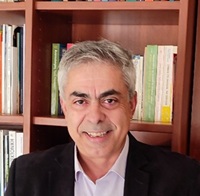
Prof. Dimitrios Karamanis, University of Patras, Greece
Professor of Alternative Energy Sources at University of Patras. His research interest started with the development of appropriate countermeasures for the mitigation of the severe environmental consequences of the Chernobyl accident and followed by cross section measurements in the thorium fuel cycle for energy production and waste incineration. Expanded to the study of wind and solar energy systems in the last twenty years, ongoing research is focused on the integration of photovoltaics in buildings and urban infrastructure for electricity generation and its synergy with nature-based solutions towards carbon neutral cities. By participating in national and international research programs as a scientific coordinator and researcher, he has published more than 120 scientific papers in scientific journals, patents and book chapters with >4500 citations and h-index 40 (Scopus). He is member of International Solar Energy Society and serves as Associate Editor of Green Technologies and Sustainability (Elsevier/KeAi) and in the Editorial Boards of Clean Energy & Sustainability; Carbon Footprints; Energy Buildings; Urban Transitions. Prof. Karamanis has been invited expert for European Climate, Infrastructure and Environment Executive Agency; European Institute of Innovation & Technology; EU Clean Energy Transition Partnership; EU Intelligent Cities Challenge; National Research Councils of European & Asian Countries. Prof. Karamanis teaches courses in the subject of renewable energy sources and their applications since 2006 in Departments of the Universities of Ioannina and Patras.
Speech Title: Powering the Future with Urban BIPV Systems
Abstract: The transition to net zero energy buildings and/or cities (NZEBs & NZEC) remains a complex and cost-intensive challenge. Building-integrated photovoltaics (BIPV) offer a high-impact solution, combining passive energy performance with on-site electricity generation. In addition to rooftop PVs, the large available surfaces on the buildings’ facades offer unique opportunities to integrate photovoltaics into opaque or transparent areas. Despite the technological maturity of BIPV systems and significant cost reductions, there are still challenges to overcome for the expansion of BIPV applications and their wider adaptation at global level. In recent research, we have validated the strong potential of BIPV to meet energy demands across multiple scales, from individual buildings to neighborhoods and up to carbon-neutral cities by 2030, in agreement with findings from comparable research studies. However, the wider BIPV implementation as an energy transition pathway is constrained by two critical socio-technical barriers: microgrid-based energy sharing and social integration. Addressing these barriers requires targeted research and innovation efforts, which are essential to unlock the full potential of BIPV in urban energy transitions and will be discussed.

Prof. Hongfa (Henry) Hu, University of Windsor, Canada
Dr. Hongfa (Henry) Hu is a tenured full Professor at Department of Mechanical, Automotive & Materials Engineering, University of Windsor. He was a senior research engineer at Ryobi Die Casting (USA), and a Chief Metallurgist at Meridian Technologies, and a Research Scientist at Institute of Magnesium Technology. He received degrees from University of Toronto (Ph.D., 1996), University of Windsor (M.A.Sc., 1991), and Shanghai University of Technology (B.A.Sc., 1985). He was a NSERC Industrial Research Fellow (1995-1997). His publications (over 200 papers) are in the area of magnesium alloys, composites, metal casting, computer modelling, and physical metallurgy. He was a Key Reader of the Board of Review of Metallurgical and Materials Transactions, a Committee Member of the Grant Evaluation Group for Natural Sciences and Engineering Research Council of Canada, National Science Foundation (USA) and Canadian Metallurgical Quarterly. He has served as a member or chairman of various committees for CIM-METSOC, AFS, and USCAR. His current research focuses on materials processing and evaluation of light alloys and composites. His recent fundamental research is focussed on transport phenomena and mechanisms of solidification, phase transformation and dissolution kinetics. His applied research has included development of magnesium automotive applications, cost-effective casting processes for novel composites, and control systems for casting processes. His work on light alloys and composites has attracted the attention of several automotive companies.